17 Hydrangea Wagashi Designs for Rainy Season
June 14, 2026 Tradition
Ajisai, the hydrangea, is the flower of Japan’s rainy season, and for centuries confectioners have shaped it into sweets meant to be admired as much as eaten. Here are 17 designs to save, gift, and order fresh while the rains last.
The rains have a way of quieting everything. By June, the bright flush of spring is gone, and Japan slips into tsuyu – the rainy season, when grey skies settle in and few flowers dare to bloom. Except one.
The hydrangea, or ajisai, comes alive precisely when everything else fades. Its blue and violet clusters deepen with every downpour, turning damp, overcast streets into something quietly beautiful. In Japanese culture the flower carries a fitting meaning: gratitude, sincerity, a heartfelt thank-you.
It is no surprise, then, that wagashi makers have spent generations translating this rainy-season flower into sweets. Below are 17 hydrangea wagashi designs — from hand-sculpted nerikiri blooms to translucent jelly that looks like captured rain. Each one can be admired, saved, and ordered fresh while the season lasts.
What are hydrangea wagashi?
Hydrangea wagashi are traditional Japanese sweets shaped to resemble the ajisai (hydrangea) flower. They are made during the June-to-July rainy season, usually from nerikiri (sweetened white-bean paste), kanten or kingyokukan (translucent agar jelly), or kohakutou (crystallised sugar). Like all wagashi, they are designed to reflect the season and to be as beautiful to look at as they are to eat.
1. Blue Hydrangea Wagashi
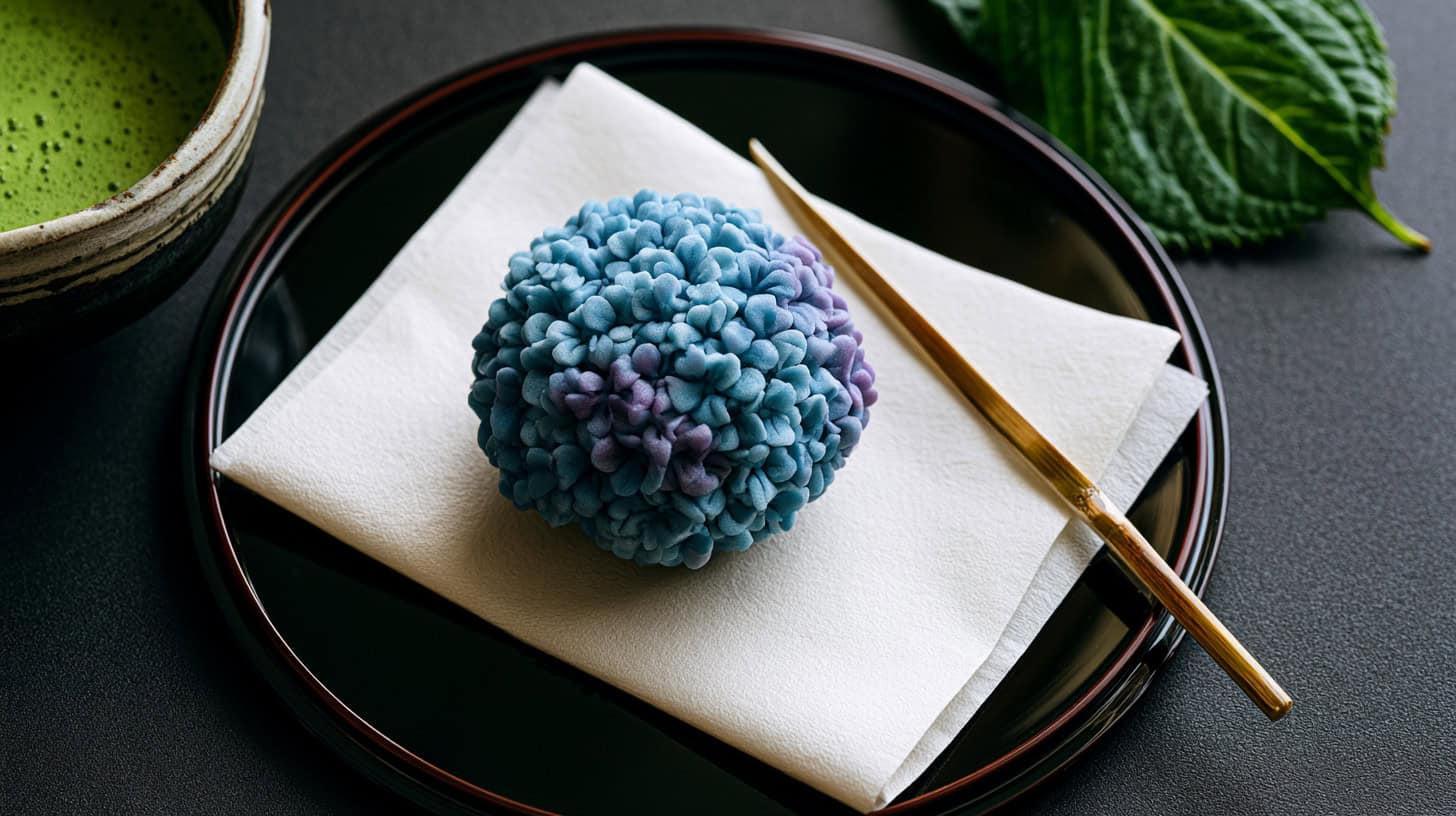
The most recognisable of them all. A blue hydrangea wagashi is shaped from nerikiri — a smooth, pliable sweet bean paste — into the rounded cluster of a mophead bloom, then tinted the true ajisai blue that deepens in acidic soil. Tiny sculpted petals catch the light like a flower still wet from rain. This is where every collection begins.
2. Nerikiri Hydrangea Bloom
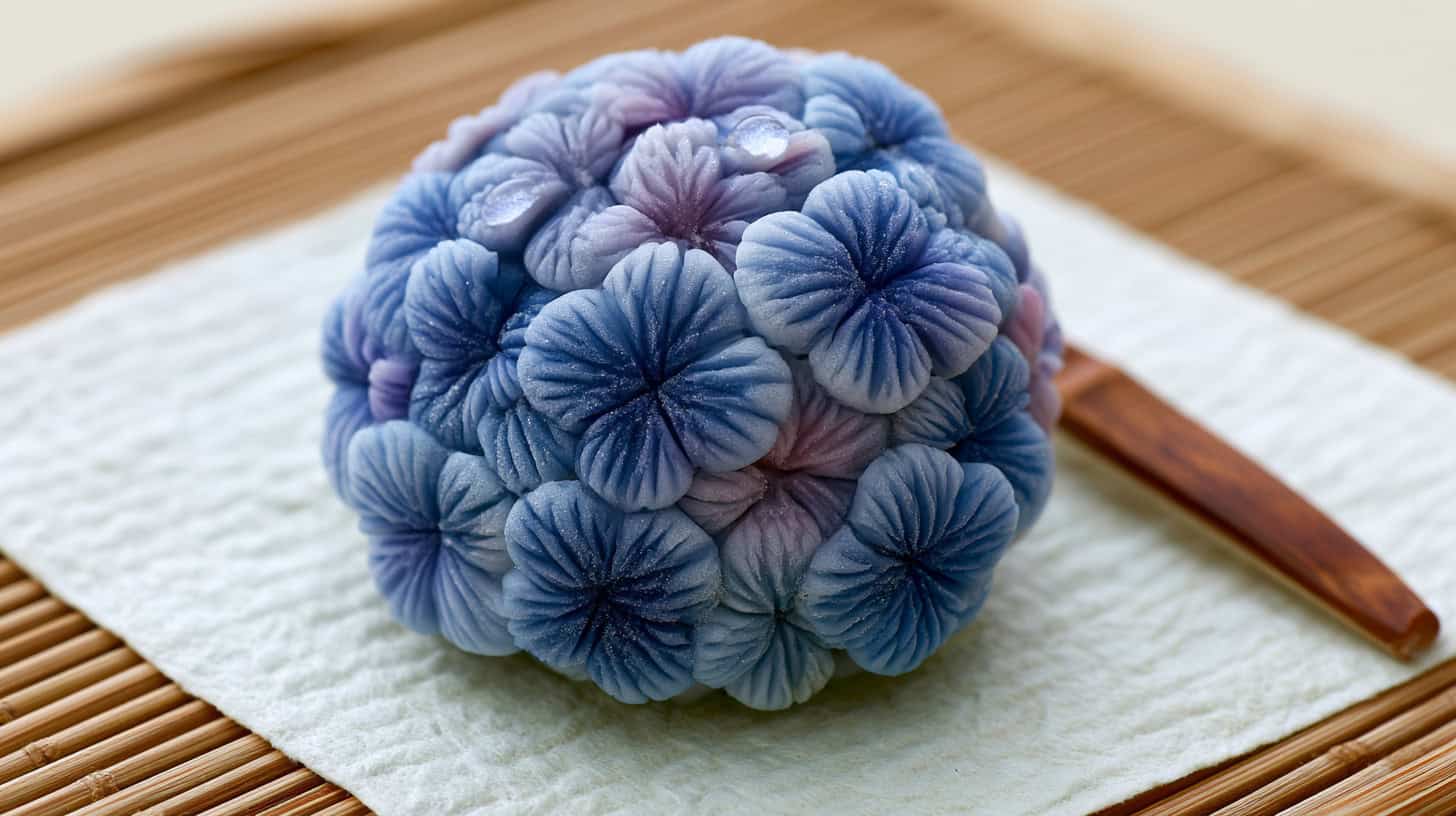
Look closely and the craft reveals itself. Each petal of a nerikiri hydrangea is shaped by hand, pressed and folded with a wooden tool called a sankaku-bera. A single bloom can hold dozens of four-petalled flowers layered into a dome. It is edible sculpture — the reason wagashi is considered an art form, not just a dessert.
3. Wedding Favour Hydrangea Wagashi
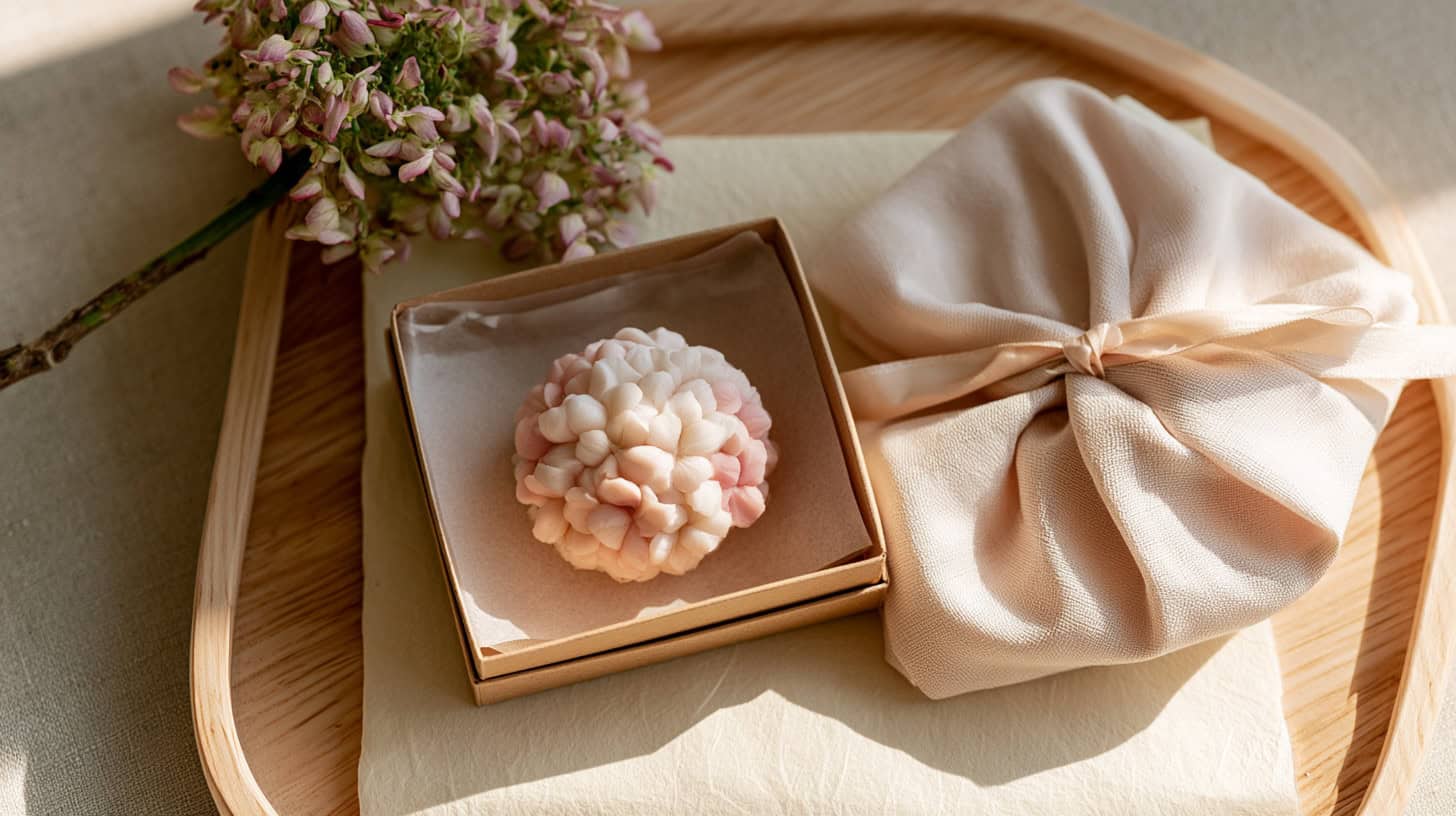
In soft blush and white, the hydrangea becomes a wedding flower. Because ajisai symbolises gratitude, a hydrangea wagashi makes a favour that thanks each guest in the most fitting way — beautiful, meaningful, and unmistakably Japanese. Presented in individual boxes, they double as place settings and keepsakes.
4. Purple Hydrangea Wagashi
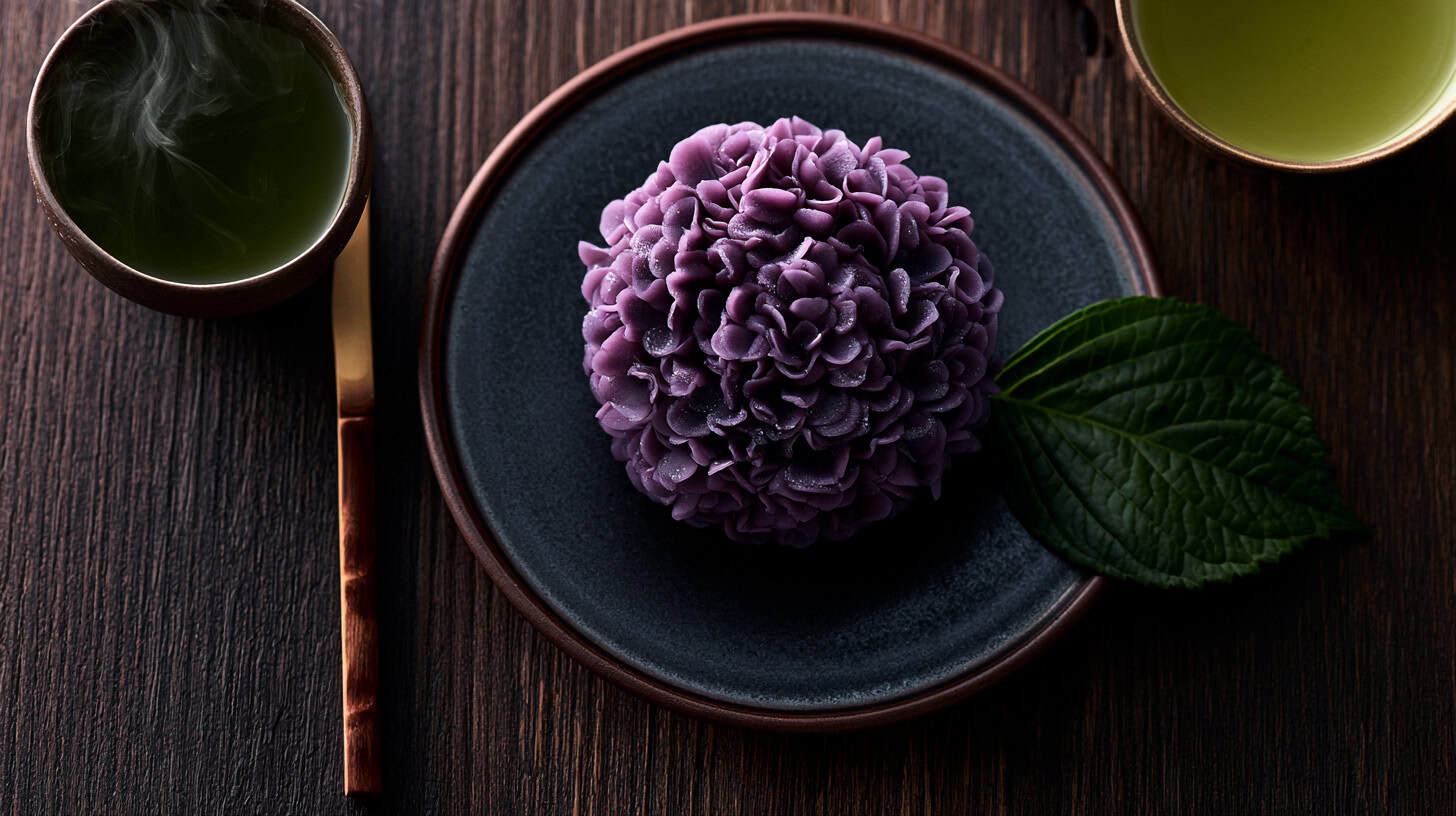
Purple has always signalled prestige. The deep violet hydrangea — rarer in nature than its blue and pink cousins — translates into a wagashi of quiet luxury, ideal for corporate gifting, milestones, and moments that call for something distinguished. Where blue feels serene, purple feels ceremonial.
5. Kingyokukan Hydrangea Wagashi
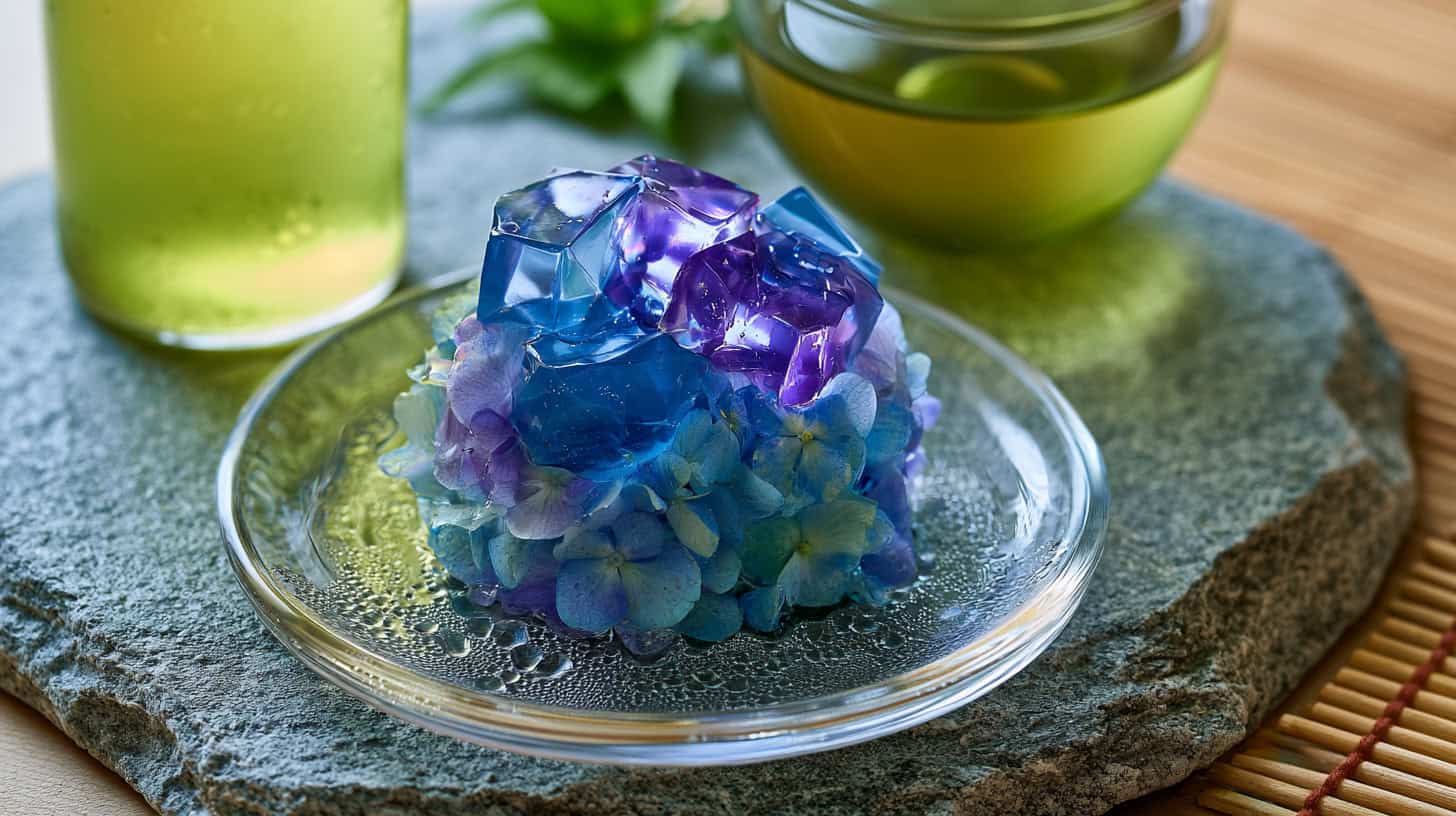
Here the flower turns to jewels. Kingyokukan is a translucent jelly set with agar and cut into glittering cubes that resemble dewdrops or rain caught mid-fall. Studded over a bloom or served alone, these glassy petals are the design that makes people stop scrolling — light passes straight through them.
6. Minimalist Hydrangea Wagashi

Not every hydrangea shouts. A minimalist version pares the flower to its essence: a single pale bloom on a dark stone plate, one curve of colour, nothing more. This is wagashi for the wabi-sabi sensibility — beauty in restraint, in the space around the object as much as the object itself.
7. Thank-You Gift Hydrangea Wagashi
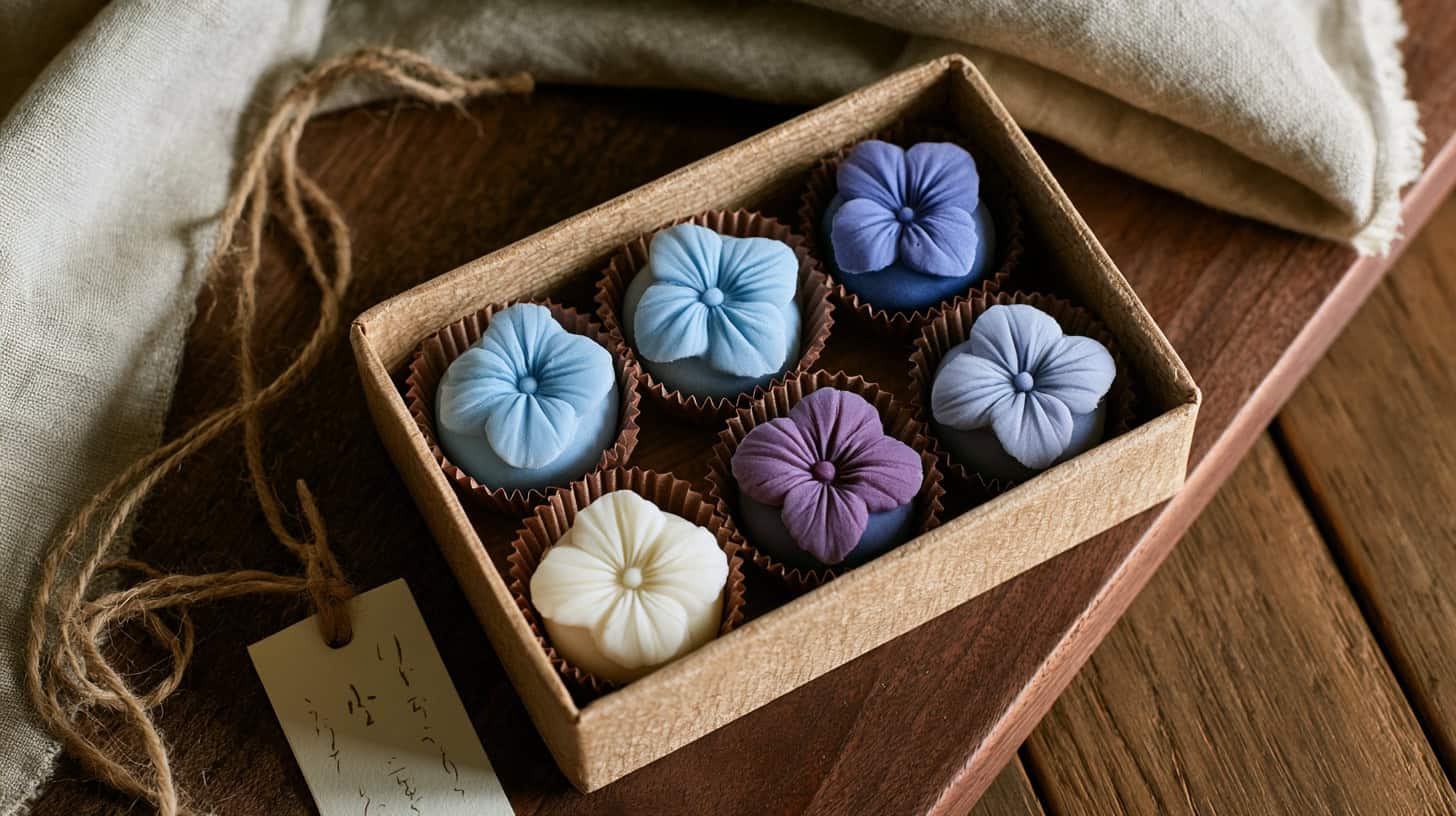
If one sweet could say thank you, it would be this. The hydrangea’s cultural meaning — gratitude and sincere feeling — makes it the natural choice for a gift of appreciation. A small box of hydrangea wagashi speaks more gracefully than words, whether for a host, a mentor, or someone owed a quiet kindness.
8. Green Hydrangea Wagashi
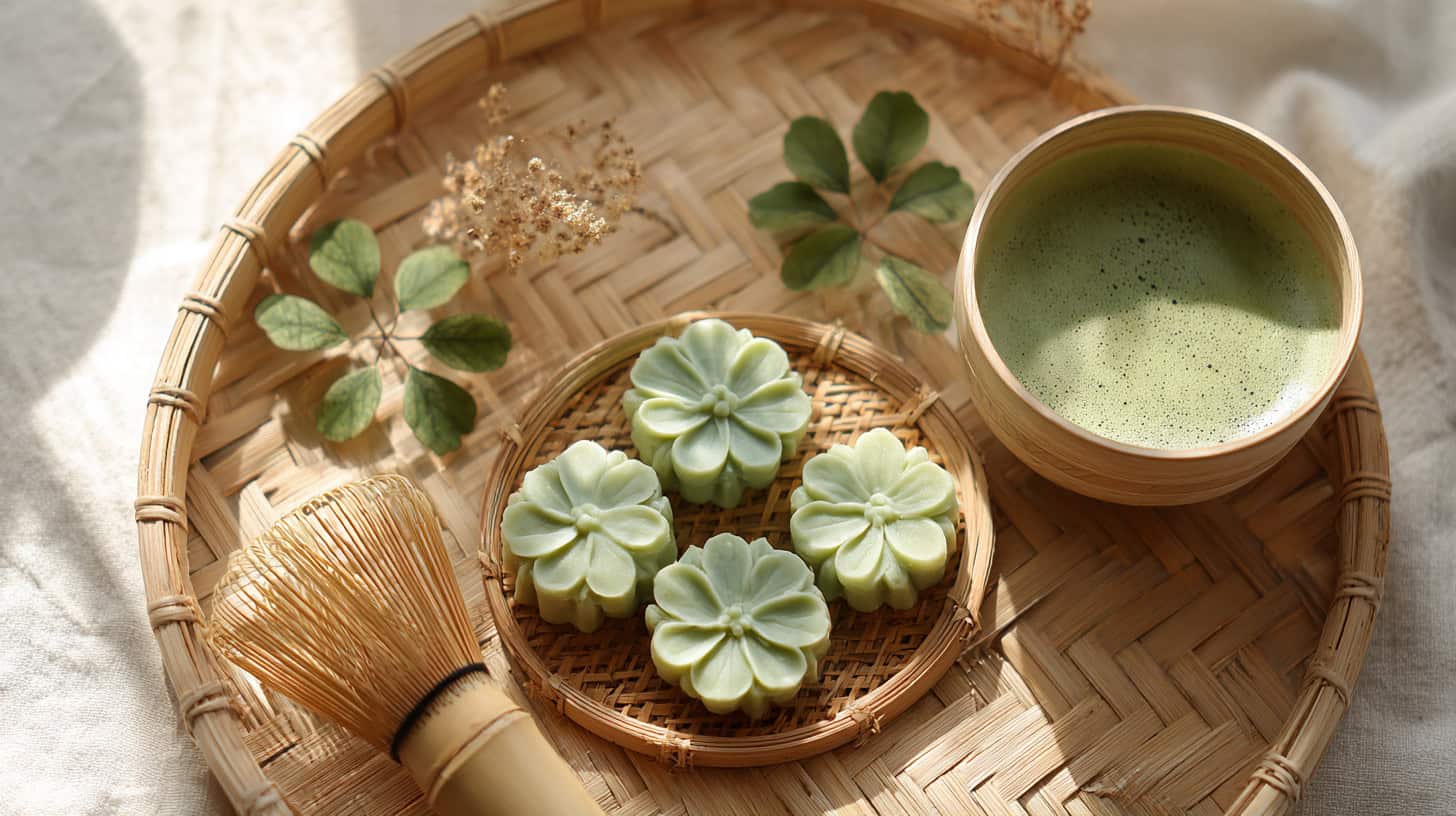
The unexpected one. Soft green hydrangeas — think Annabelle blooms — have become a favourite in modern floristry, and they translate beautifully into wagashi. Pale matcha and pistachio tones feel fresh, contemporary, and a little surprising against the expected blues and purples. A design for those who already know the classics.
9. Kanten Hydrangea Wagashi
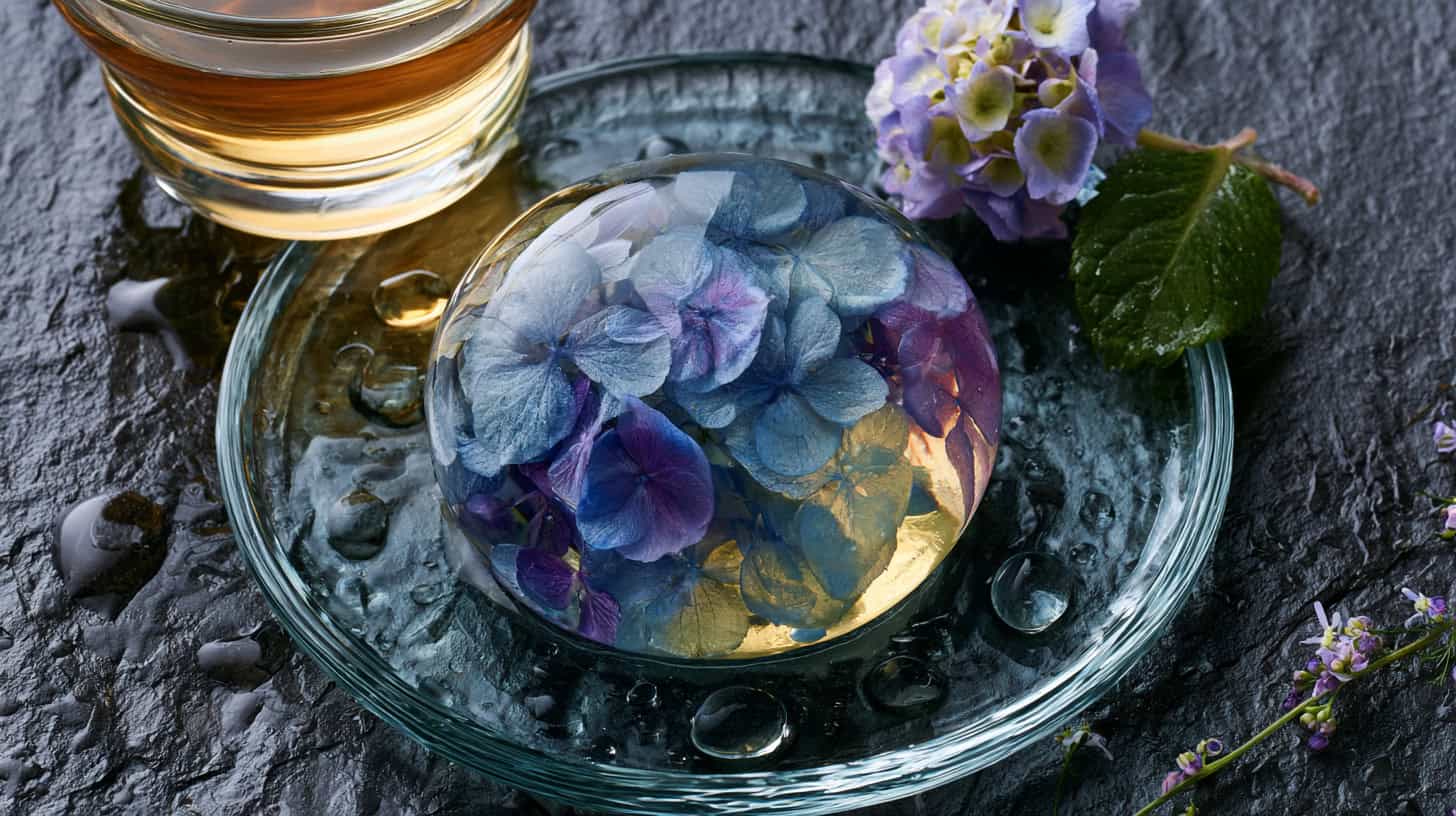
Kanten — Japanese agar jelly — is the material of summer. Clear and cooling, it is set around suspended petals so the whole sweet looks like a flower frozen in rainwater. Eating it is meant to feel like relief from the humidity of tsuyu: coolness you can see before you taste.
Order this season’s hydrangea collection
Every design here is made fresh in small batches and available only while ajisai blooms – June through mid-July.
10. Pastel Ombré Hydrangea Wagashi
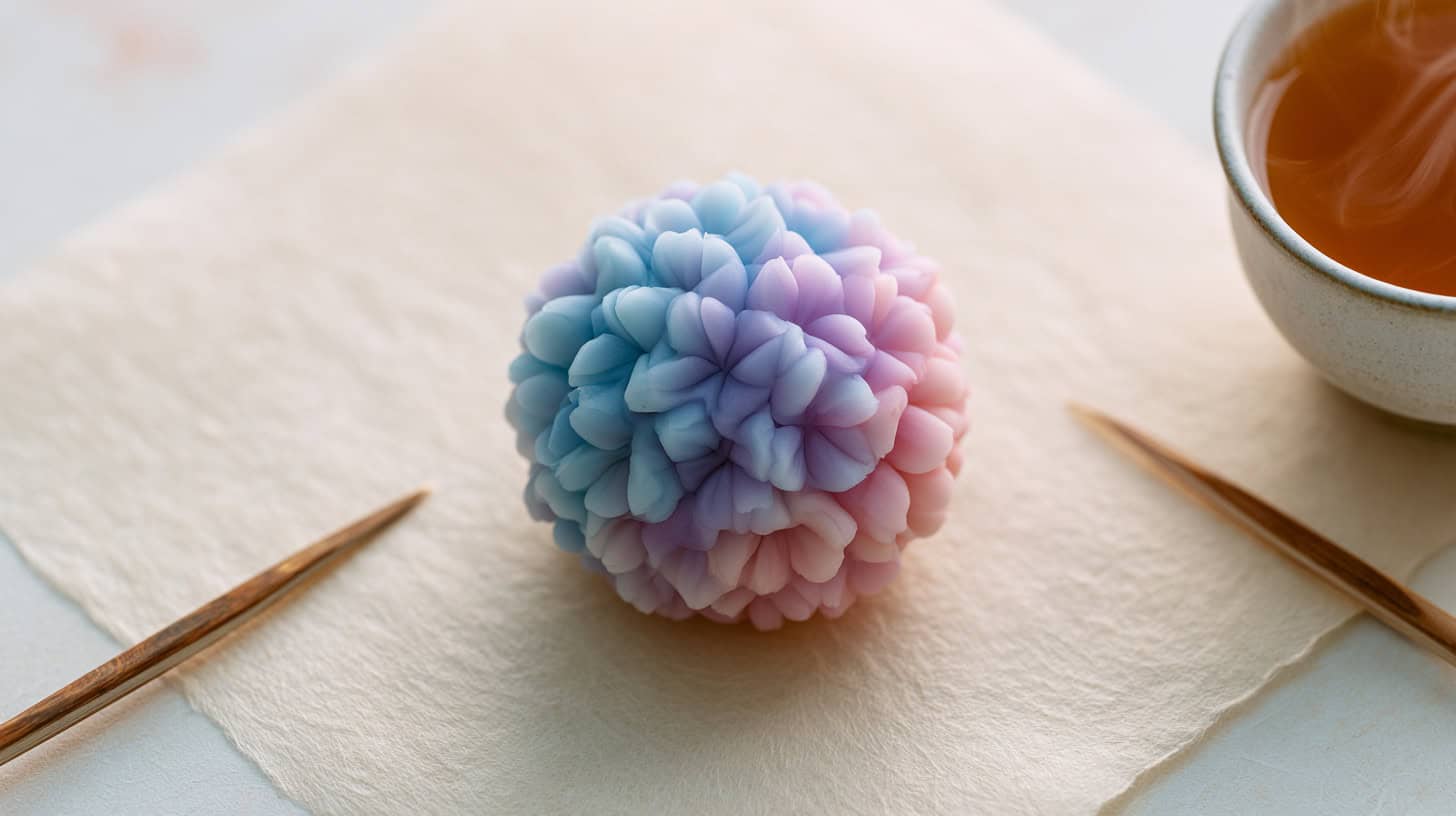
Real hydrangeas rarely hold a single colour — they drift from blue to lavender to pink across one cluster, shifting with the soil beneath them. The ombré wagashi captures that gradient in a single bloom, blending tones petal by petal. It is among the most saved and shared designs for exactly this reason.
11. Tea Ceremony Hydrangea Wagashi
In the tea ceremony, the sweet is chosen to reflect the season — and in June that means ajisai. A hydrangea wagashi served before a bowl of matcha is a centuries-old pairing, the sweetness preparing the palate for the tea’s gentle bitterness. This is the flower in its most traditional setting.
12. Lacecap Hydrangea Wagashi
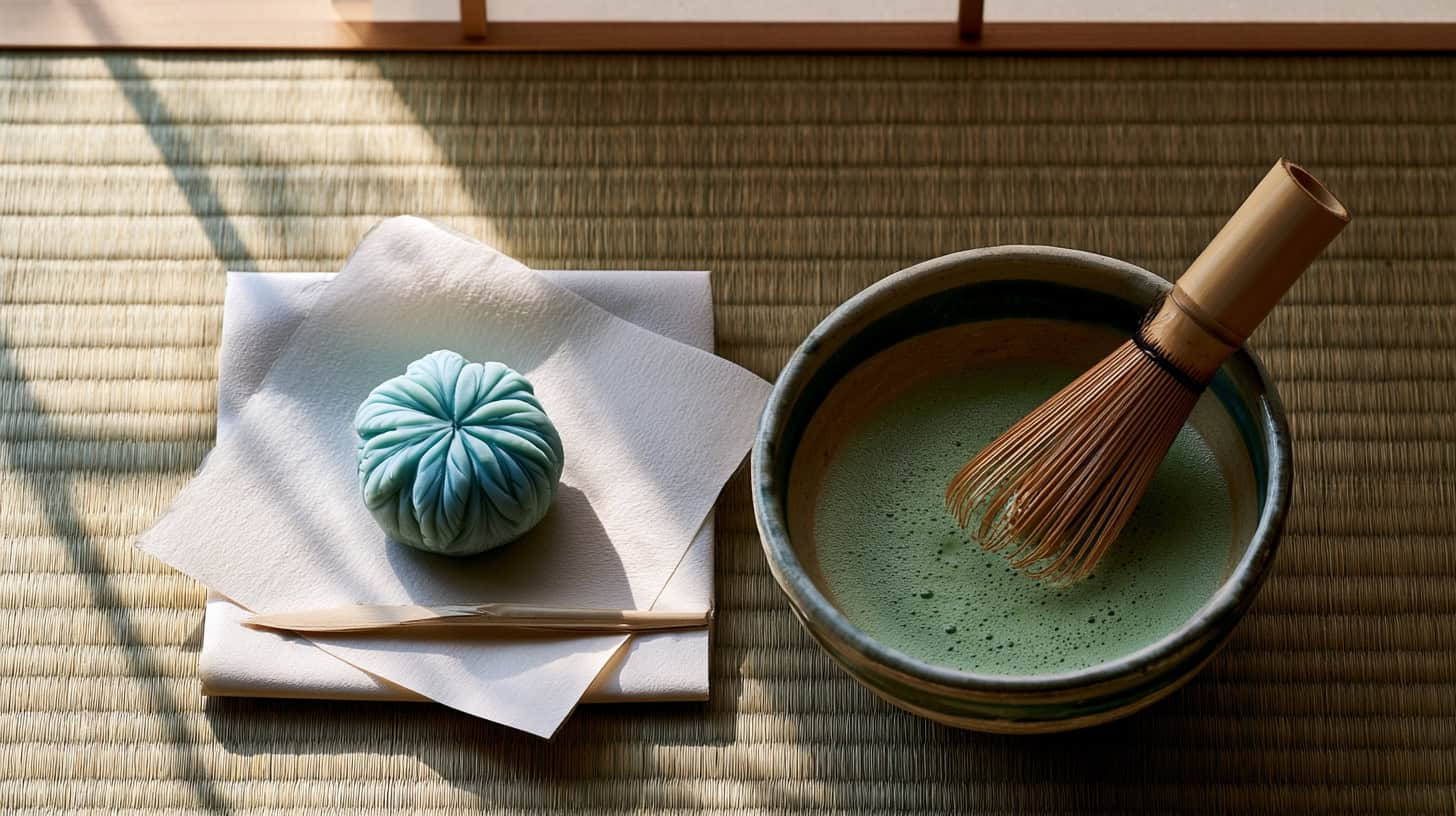
Not all hydrangeas are round. The lacecap variety blooms flat, with tiny budded florets at the centre ringed by larger open flowers. Rendered in wagashi, this delicate, less-expected form signals real botanical knowledge — a design that quietly tells collectors you understand the flower, not just the colour.
13. Mizu Yōkan Hydrangea Wagashi
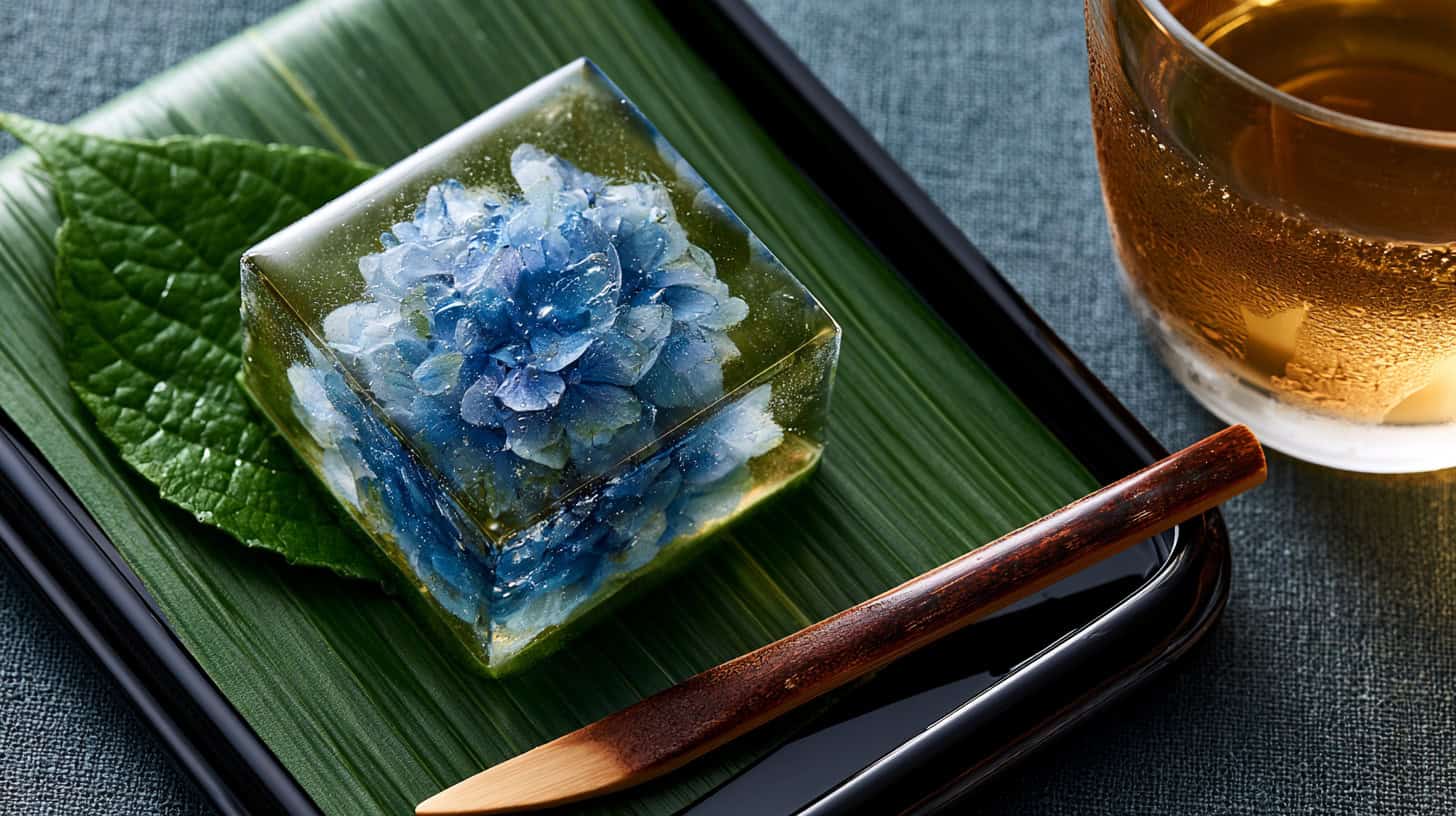
Mizu yōkan is a soft, chilled red-bean jelly, lighter and wetter than its winter counterpart. Topped with a clear kanten layer holding a single suspended hydrangea, it becomes a two-storey sweet: smooth bean below, captured flower above. Served cold, it is a staple of the Japanese summer table.
14. Antique Hydrangea Wagashi
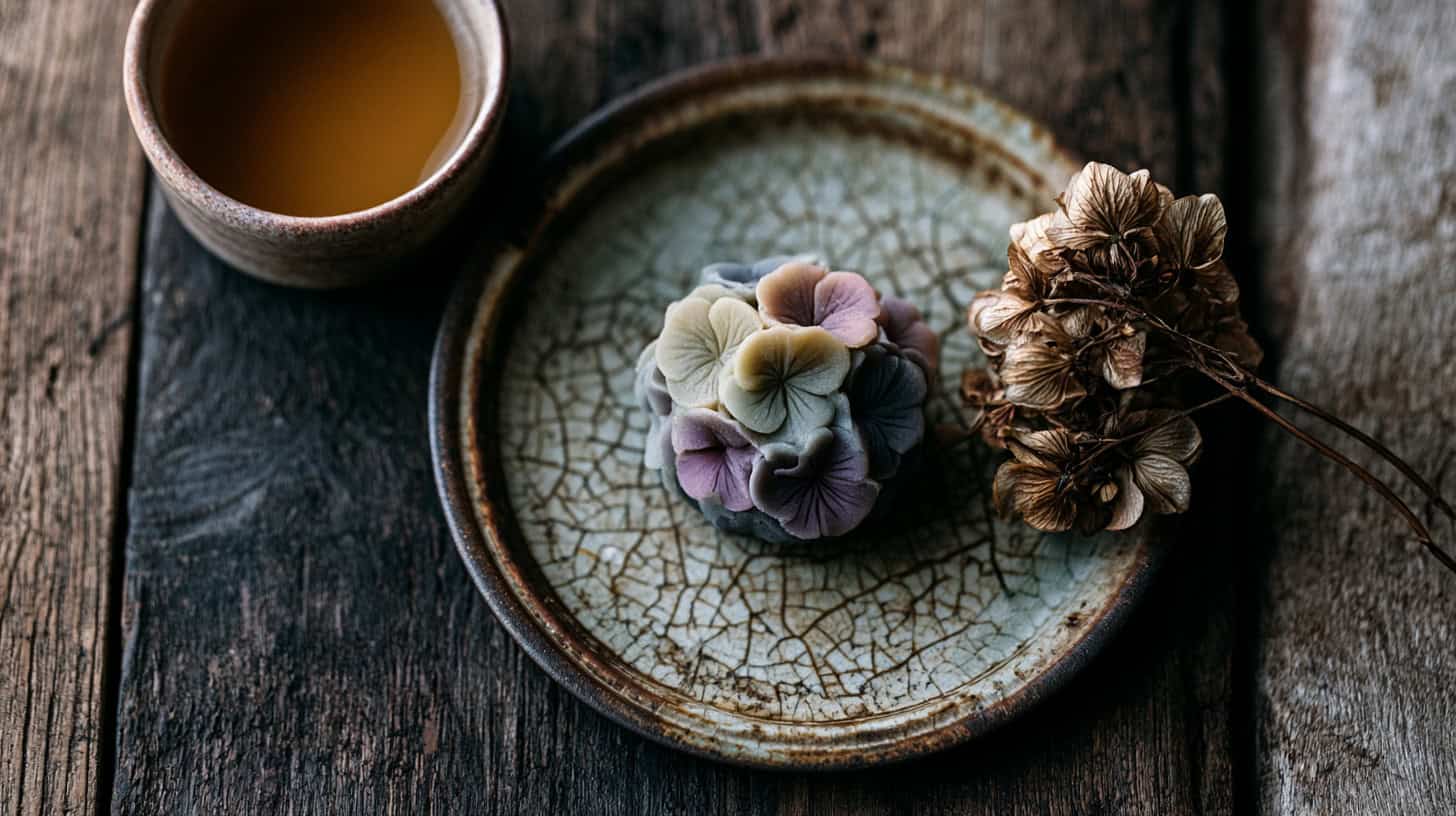
As the season turns, hydrangeas fade — their blues softening to dusty mauve, sage, and parchment. Florists call these prized faded tones “antique hydrangea,” and they have become a wedding favourite. In wagashi, these muted, vintage shades feel romantic and a little melancholy, like the very end of the rains.
15. Kohakutou Hydrangea
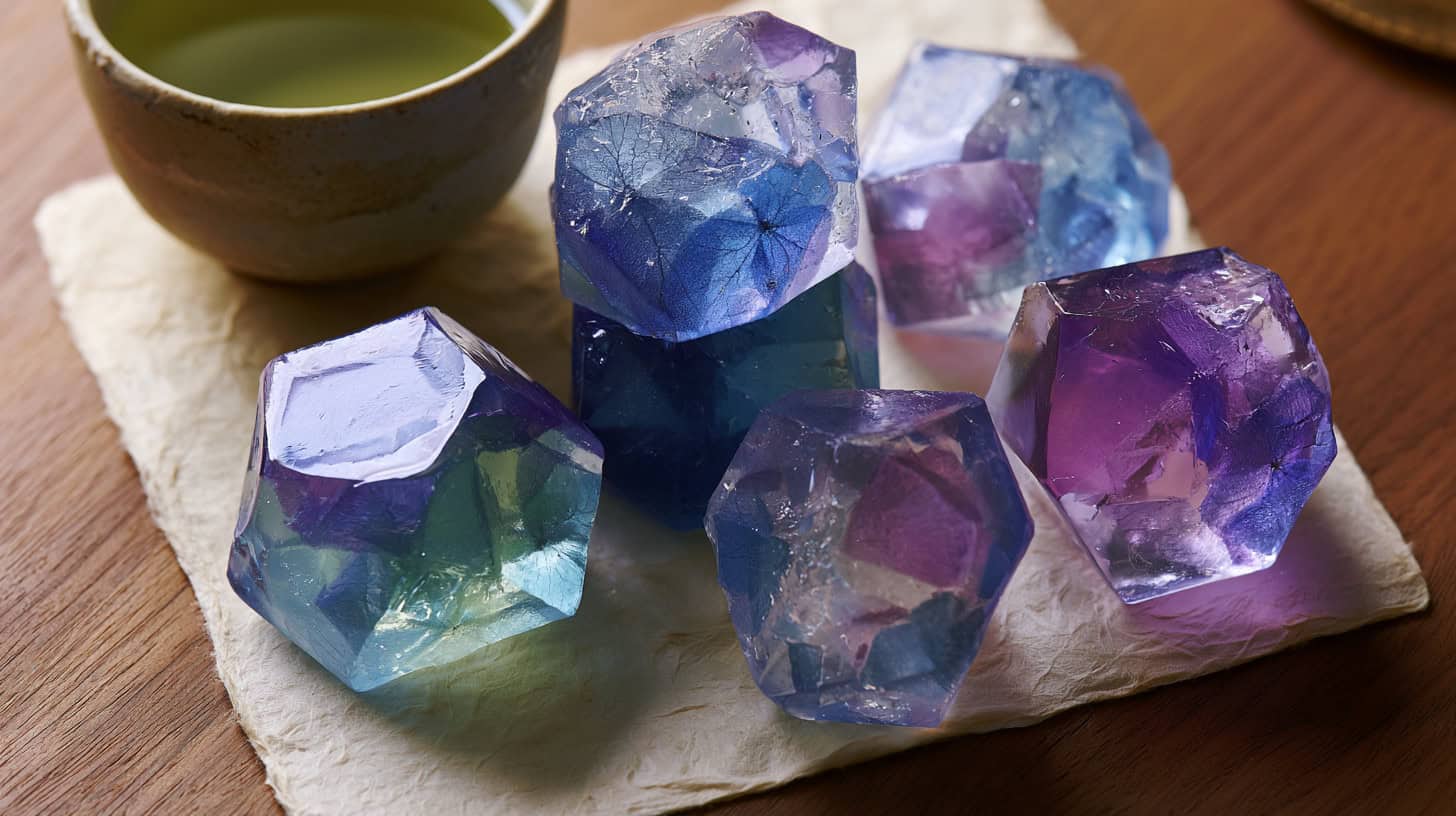
Kohakutou is a crystallised sugar candy — crisp and glassy on the outside, soft and jelly-like within. Cut and tinted into hydrangea hues, the pieces look like edible gemstones or sea glass. They are extraordinarily photogenic, the kind of sweet saved to jewellery and art boards as often as food ones.
16. Hostess Gift Hydrangea Wagashi
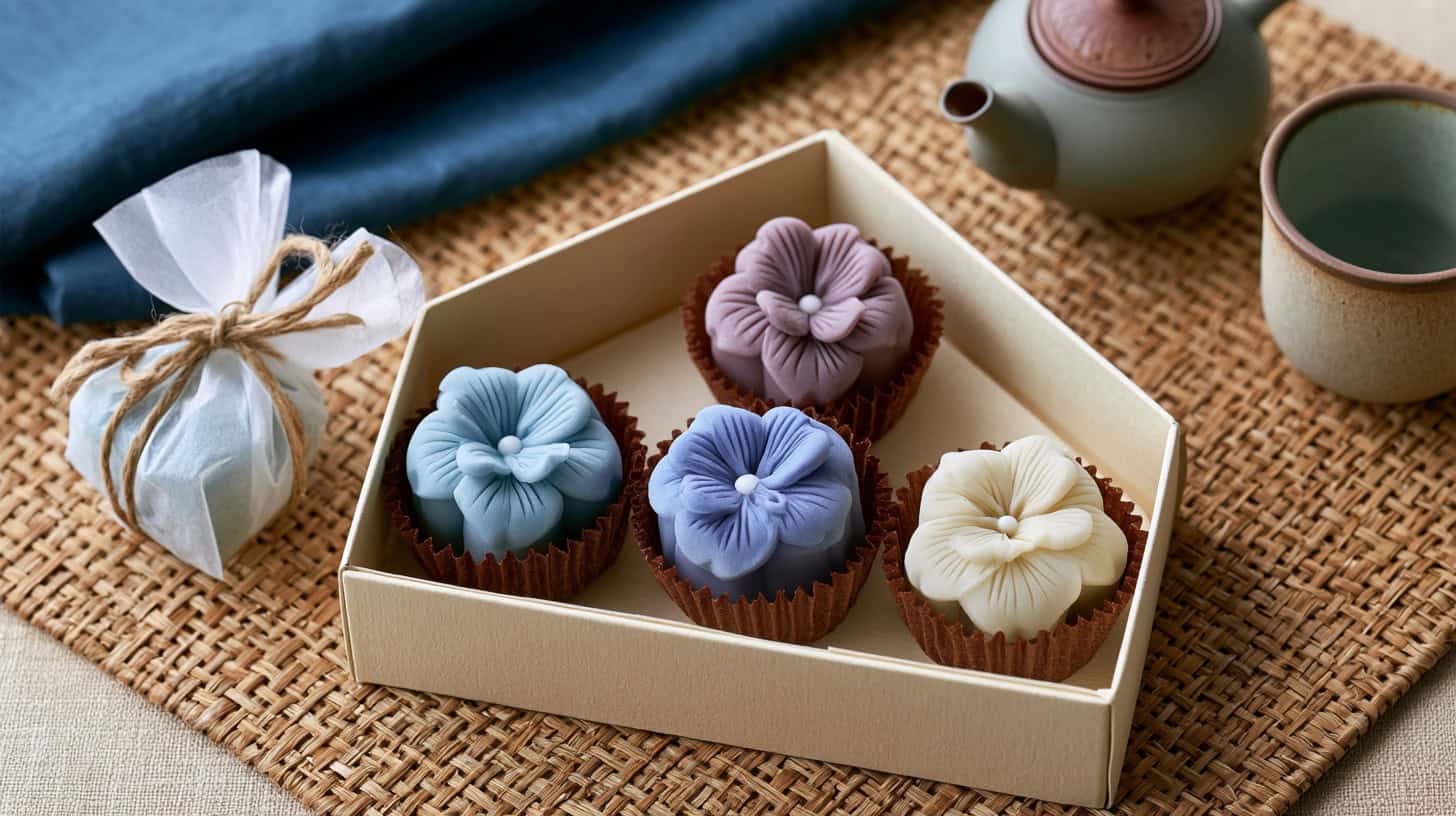
Some gifts are smaller, everyday gestures. A modest set of hydrangea wagashi — three or four pieces in a simple box — is the perfect thing to bring to a dinner, a visit, or a friend’s home during the rainy weeks. Thoughtful without being extravagant.
17. Hydrangea Wagashi Gift Box

And the whole season in one box. The hydrangea wagashi gift box brings together an assortment of the designs above — sculpted nerikiri, jewel-like kingyokukan, crystallised kohakutou — arranged as a single, giftable collection. It is the simplest way to hold the rainy season in your hands, or to send it to someone who would understand.
A flower that doesn’t last

The rains do not last. Ajisai blooms for only a few weeks each year, from the start of June to the middle of July, and the wagashi made in its image follow the same brief calendar. That is part of their beauty — like the season itself, they were never meant to be permanent.
If a hydrangea has ever made you pause on a grey day, this is your window. Made fresh, in small batches, for as long as the flowers last.
→ Order this season’s hydrangea collection
Frequently asked questions
1. What are hydrangea wagashi made of?
Most hydrangea wagashi are made from nerikiri (a smooth paste of white bean and mochi), kingyokukan or kanten (translucent agar jelly), or kohakutou (crystallised sugar). These ingredients are typically plant-based.
2. Why is the hydrangea linked to Japan’s rainy season?
Hydrangeas bloom during tsuyu, the rainy season that runs from early June to mid-July. Because few other flowers bloom then, ajisai became the symbol of the season, and its colours are said to deepen with the rain.
3. What does the hydrangea symbolise in Japanese culture?
The hydrangea symbolises gratitude, sincerity, and heartfelt emotion, which is what makes hydrangea wagashi an especially fitting gift for saying thank you.
4. When can you buy hydrangea wagashi?
Hydrangea wagashi are seasonal and generally available only during the rainy season, from June through mid-July, while ajisai is in bloom.
5. Are hydrangea wagashi vegan?
Many wagashi are naturally plant-based, made from beans, sugar, and agar without dairy or egg.
- All Posts
- kimono


